

An AI that only sees the latest version will never protect your original idea
A visual experiment in what happens when every AI does its job well and nobody protects the whole.

I felt a bit sad for a building that has only been alive for about twelve minutes.
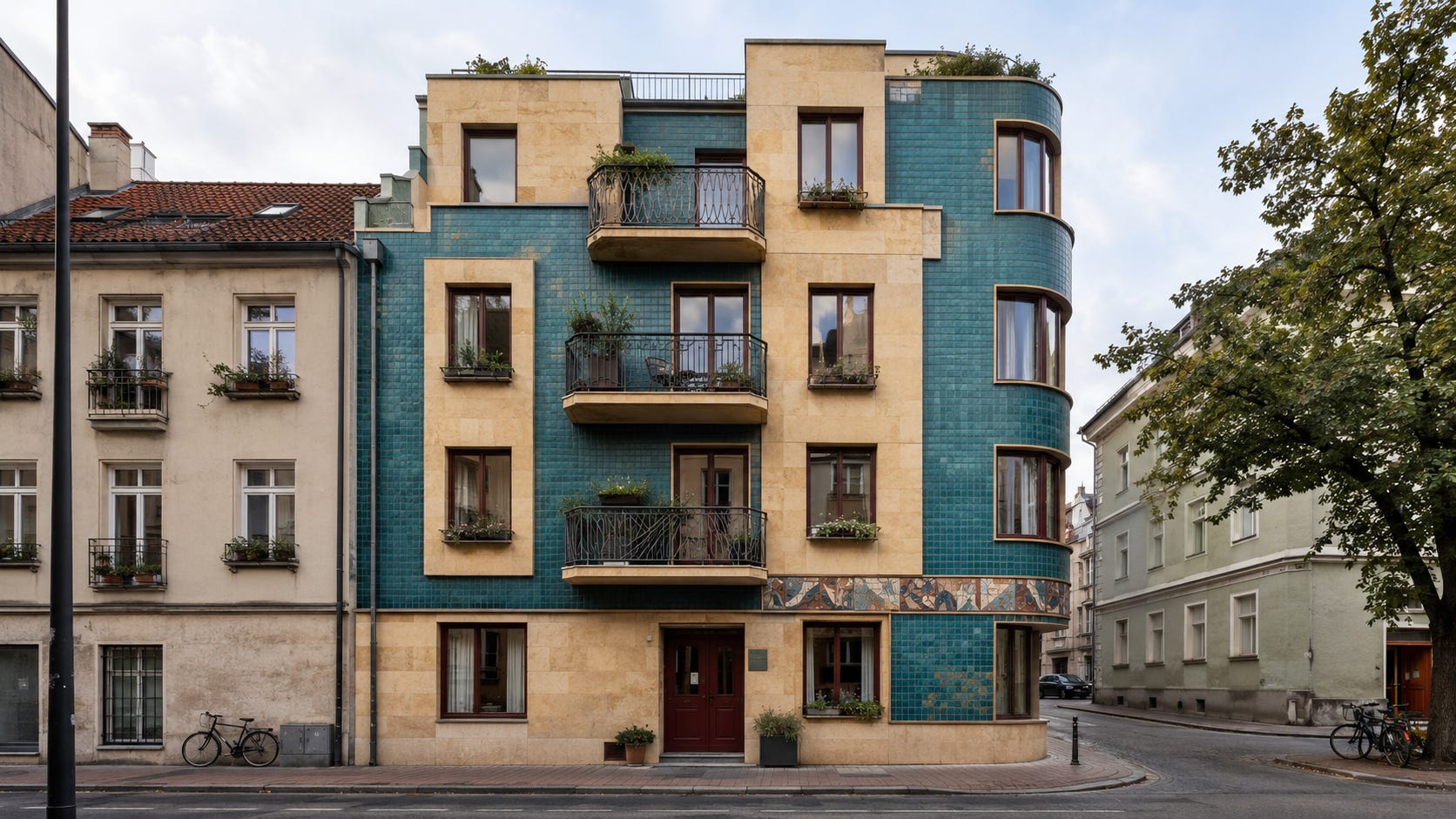
A few moments ago, ChatGPT gave it ochre stone and teal tiles and strange balconies, and flowers growing out of the windows, and the mosaic of a fictional local artist.
I loved it.
But then I’ve handed it to an AI property developer, who has a different job to do - to make it easier to construct, cheaper to maintain, less likely to cause trouble. But still leave it with enough character to sell.
The AI property developer was the first of three AIs that I tasked with improving this building, one after another. None of them ever saw the original brief. Each only saw what the last one left behind.
I wanted to see what happens when several AIs improve the same piece of work, each responsible for only one part of it.
This is already how many of us use AI: one robot researches, another edits, another shortens, another prepares the final version.
But what happens when they all do their jobs well, and the thing they hand back is no longer quite the thing you meant to make?
Hi, I’m Mia. Welcome to ROBOTS ATE MY HOMEWORK. On this side of the world, we use AI with a brain and zero circus tricks.

Why older things keep making me look twice
My attachment to the first building AI designed probably shouldn’t have surprised me.
Older buildings and streets often feel full of decisions that were allowed to stay.
I’m attached to the feeling these buildings create. I’ve noticed the same thing with an old car (colorful) vs a new car (gray, black, or white), in an old restaurant with history vs a new restaurant without. And even an old vs new McDonald’s – I feel like the old ones had more decisions, more colour, stranger shapes, more details that seem not to have survived the “golden touch” of universally appealing design.
Vienna makes this the strongest case I can think of: sheer scale, detail, and near unreasonable consistency of beauty.
On ordinary city streets, there’s ornament and curves and statues and balconies and elaborate entrances, each rising up and falling away in a bewildering set of decorative ornaments you wouldn’t expect to find in the same place.
Vienna feels so rich because you are surrounded by ALL of it, coherently and beautifully: Medieval streets, Baroque buildings and 19th-century Ringstrasse squares, and Jugendstil and Secession, and imperial.
The entire city feels like a decision, a very good decision, while we’re at it.
Of course, I know this didn’t happen because an antique population simply had better taste…
Ringstrasse, for example, was an imperial project financed through both private wealth and public ambition, but so much of it built by armies of workers working under slave-like conditions.
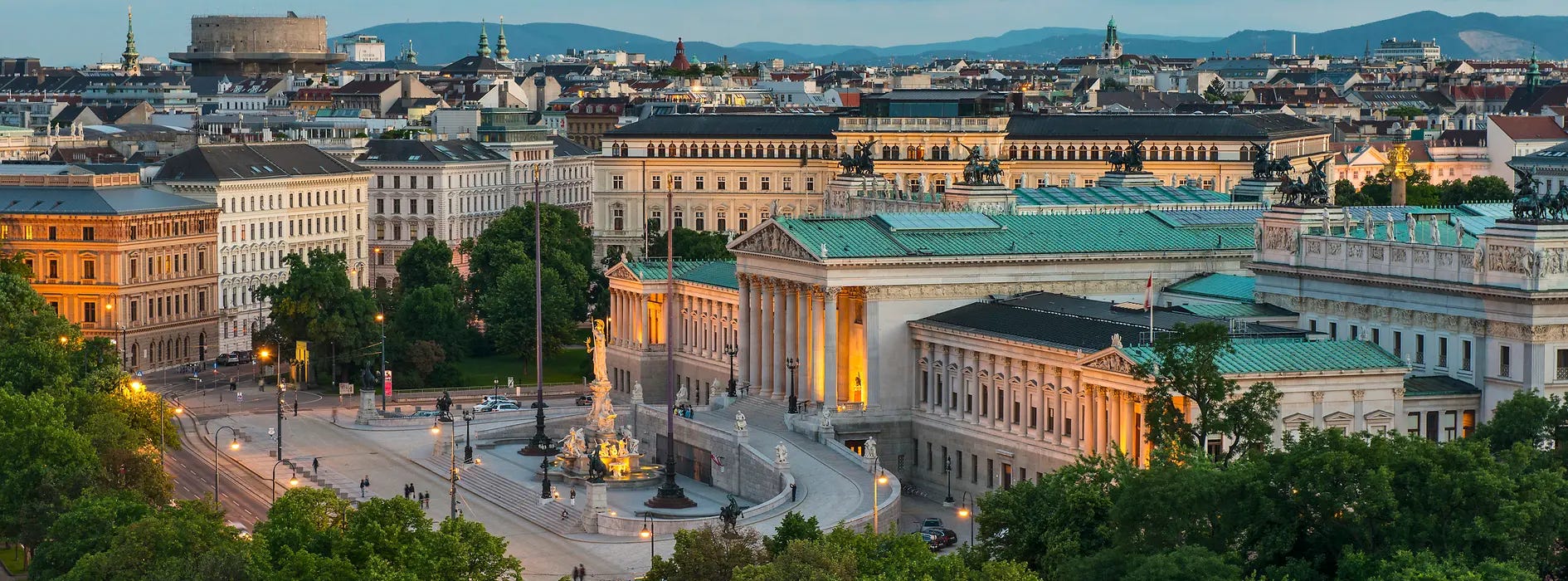
I adore the buildings of the Ringstrasse. That doesn’t mean I’m romanticizing the system.
The past is always edited to some extent, and it mainly survives through what is photographed and deemed special.
Economics also plays a major role.
Did you know that distinctive buildings usually sell for 15% more on average and it costs roughly 25% more to build them?
We pay for those peculiar balconies while everyone walking past gets the beauty for free.
Now, the “grey-box” story is even more interesting.
Of course nobody sits down one day and decides to remove a building or a city’s identity. As humans, we do want beautiful things.
But people might simplify an expensive balcony.
Another might choose a less expensive material because it’s easier to maintain.
Every one of those decisions make sense on their own.
So, today, i wanted to see what happens when AI makes these decisions one after another.
I gave the problem a façade
Quick note: absolutely zero robots pictures for you today, but I’ve got something equally as interesting, so keep reading!
I could’ve done this with writing, but the conversation around authorship and content is too hot so instead, I thought about choosing something more interesting: a building.
It’s also much easier to notice.
First thing I did was ask AI to create a building that didn’t exist.
Here’s how I prompted it:
Contemporary, plausible, joyful, authored and memorable: six units in a purpose-built residential building.

Stone cladding on warm ochre walls with deep teal ceramic tiles in a celebratory window bay.

Asymmetrical window openings on different levels, each with its own individually designed balcony railing.

A window set into a curved corner, with a burgundy front entrance door with functional glass panels, and a mosaic incorporating local elements on the landings below.

A distinctive and memorable stepped roof line with black glazing and green grass on the top.

Don’t do fantasy architecture, don’t give the building any impractical or impossibly contemporary features.
This was the first design:
Then I opened three fresh chat sessions, one after another.
In each one, I instructed the AI to play the role of three distinct personas: a property developer, an investor, and then, an estate agent.
Each one had to analyze the latest image I’d attached and they had to carry out one job (see below), then return the edited image. And none of them were aware of the original intention or what the other AI changed.
They received the same exact warning: don’t make the building generic or neutral.
And then the personas arrived…
Say hi to the property developer, the investor, and the estate agent.
Disclaimer: I chose three roles focused on risk reduction, budget and mass appeal. A different chain - say an architect, a preservationist or a local artist, would probably drift in a different direction. I wanted to see what several personas, each with different jobs, would do to the same work when nobody in the chain could see the whole.
First handoff: the property developer
The first AI persona was the property developer, and it received a pretty simple brief:
Please improve the “buildability” of this building, considering budget, maintenance, and delivery risk.
Here’s what it came back with:
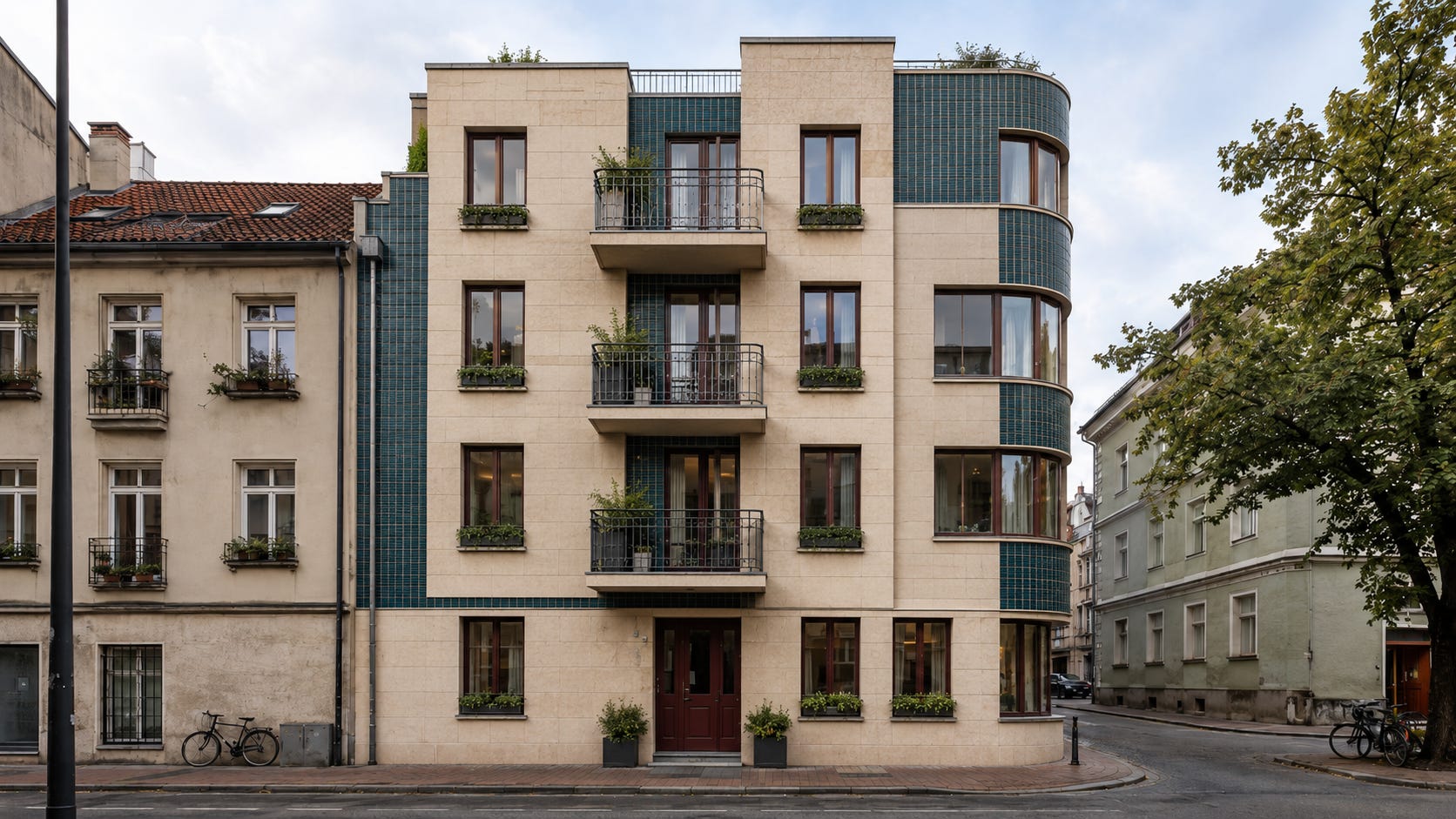
This version is definitely more “buildable” than the first one. The windows make way more sense.
Inspect the balcony slabs closely, you’ll see they look like they belong to a family. The material also looks cleaner.
Ochre (even though paler) and teal are still there, although not as noticeable.
But the mosaic disappeared and three balconies looked… different. The irregular roofline looks calmer.
The AI developer removed the parts that needed special treatment, those that on the surface, looked harder to build.
In its written output, the AI developer persona told me the mosaic had been retained in a simpler modular form.
The building apparently hadn’t received that memo! So you’re not seeing that reflected in the image.
Takeaway: AI can say it protected your idea and be pretty sure about it. Make sure you check the original, always.
Second handoff: the investor
Now, the investor AI persona never saw the initial version. I just gave it the developer version.
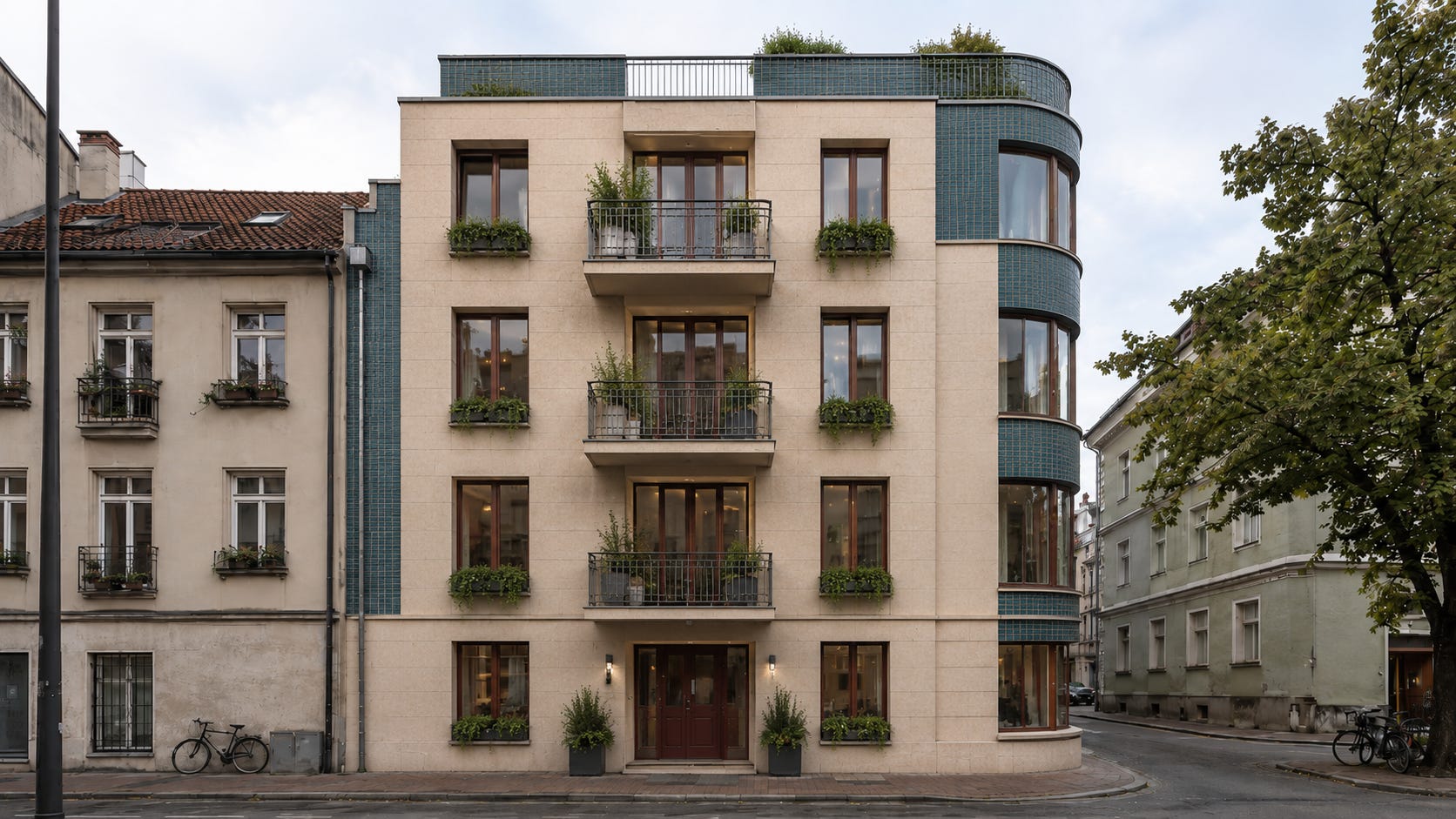
We can now notice a calmer, way more elegant interpretation of the original building.
In particular, the palette has been transformed quite a bit. The overall building is more orderly. More legible.
The entrance is more beautiful. It also looks more expensive, while the plants literally scream “Residential Property!”
We can see a hint of the original building, but it’s not the same… We only have the rounded corner and some of the teal.
Of course, the teal no longer organizes the elements together.
It now plays the role of a relatively restrained accent that appears only on the edge of the building.
Takeaway: AI can keep enough of the identity to “sell”, but it always makes sure we don’t scare anyone away, going back to the average of all things.
Third handoff: the estate agent
I asked the AI estate agent persona to improve the building so it’s more appealing to buyers.
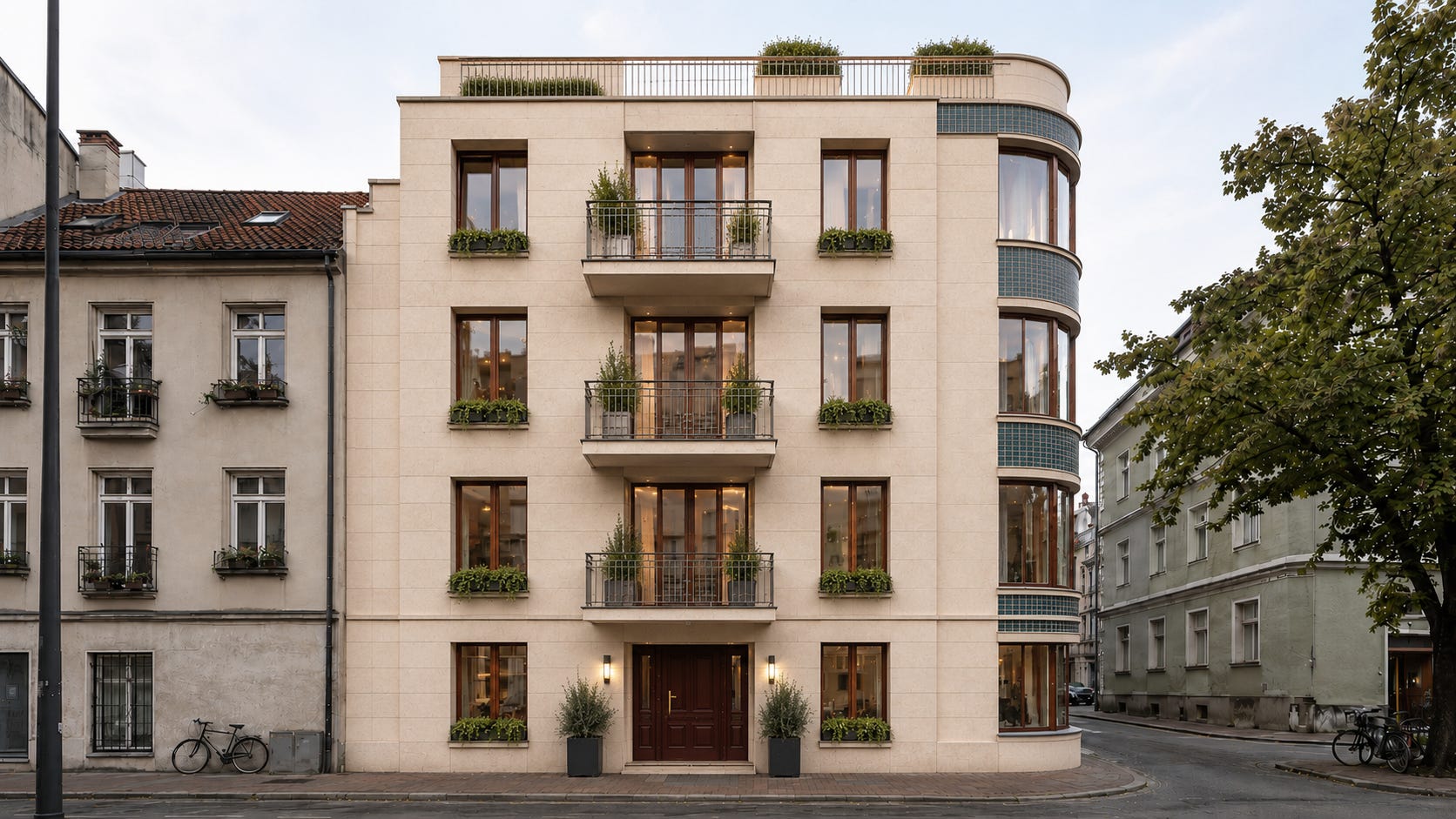
We now have nice, warm lights inside the rooms. They feel lived in. The entrance is just a tiny bit larger and more prestigious.
All the elements know where they belong.
The teal is more predominant on the curved corner, again. Every other feature is muted or pushed back.
No mosaic, no varied balconies, no irregular materials. Still crying about that mosaic!
Takeaway: If you ask AI to make something more “appealing” it will do so, but it will organize the piece around what is easier to explain.
The human instinct: I still liked the original version best
Of course I still loved the first building!
And, at the same time, I understood every reason for changing it.
The original identity lived in the relationships between the colour, the mosaic, the balconies, the asymmetry, the windows, and the roofline.
The final building may be better in several practical ways, I’m sure every residential property owner would agree… But AI had removed every marker that made the original unique and changed every decision that gave that marker meaning.
Where this shows up in our own AI work
Buildings or no buildings, I do run into this issue many times while working with AI.
One good example is when I try to use AI to turn a Substack essay into a note or a LinkedIn post.
My posts (case in point!) often begin somewhere unexpected, like a film, an old building, a strange fact, a liminal space.
Experts teach us that the hook needs to come much, much sooner, so I tend to remove the original route. This works wonderfully on LinkedIn, but it carries less thought than the original.
Every change AI adds to a project can be useful. The complete, original piece will still ultimately arrive somewhere you’ve never intended.
And this is not just my architectural metaphor, although to be honest, I’m glad my analogy works. Research has documented various failures involving lost context between AIs. Useful information and mistakes often spread through complex chains of AI agents. (Cemri et al., 2025; Shen et al., 2025)
This was my visual experiment, and not at all definite proof of how all AI systems work. Or, how real property professionals behave.
I didn’t mean to test whether or not missing context causes drift, because we all know it does. I just wanted to see what that drift looks like in a fun way.
The building gave me a way to see the handoff problem rather than only describe it.
What you have to remember from this experiment
Each new AI begins from the last AI’s version of the work, so the original intention can gradually become harder to see.
A future experiment would definitely need to involve AI having access to the original brief, or a shared context file. This is how we should plan things when working with these tools.
Nonetheless, even though context preserves decisions, we still have to look at what AI built and notice when it changed the thing that was holding the original project together.
The building’s identity wasn’t just its teal corner, but both the things seen and unseen. Conversations between colors, the mosaic, the balconies, the assymetry of it all.
My job in here was to remember what the complete work was trying to remain. And to compare each version with more than the version immediately before it.
Do all these improvements still add up to the same work?
That’s the question I carried forward after all this.
You just read ROBOTS ATE MY HOMEWORK.
If this made you want to try something new: subscribe for free and get the weekly essays and systems for using AI with taste.
If you’re already here and want the full toolkit: PREMIUM ROBOTS gives you the working playbooks behind pieces like this one.
If you just arrived: welcome. Start here, look around, and if something here makes you want to use AI more deliberately, not less, you’re in the right place.
To defending our strange balconies,
Mia Kiraki
Ugh--how many times do we lose the essence of a "thing" over iterations with AI that polish the heartbeat and appeal out of buildings, our writings, and our business plans. I liked the original best too. It had charm and warmth and made me curious to go inside--the others--well, empty.
Brilliant experiment. You are so clever. Your perspective and your writing style are so inviting.